
Let’s dive into one of the most pivotal moments in American history: the Wall Street Crash of 1929. This catastrophic event marked the start of a financial storm that changed the world for years.
What Happened?
The Wall Street Crash, also called the Great Crash or Black Tuesday, commenced in late 1929. Initially, it started in September, when stock prices on the New York Stock Exchange (NYSE) began to tumble. By mid-November, the damage was extensive, and explanations often highlight the explosive bull market of the 1920s before it all crumbled.
Many people consider this crash the most devastating in American history. On Black Thursday, October 24, 1929, the market lost an incredible 11% of its value at the outset. Just a few days later, Black Tuesday followed, where a staggering 16 million shares exchanged hands, resulting in a staggering $14 billion in stock value disappearing. Just like that, thousands of investors faced ruin.
Background
The 1920s weren’t all jazz and flappers; they also brought wealth and excess, often disrupting the economic stability that many hoped would last. Rural Americans flocked to cities, driven by hope for a brighter future. However, declining productivity and consumer debt were also on the rise, warning signs that few noticed at the time.
Despite those signs, optimism reigned as the Dow Jones Industrial Average skyrocketed, peaking just before the crash. Yet, in September 1929, economist Roger Babson’s warning about an impending crash made waves, although many considered it merely a “healthy correction.”
The Crash Unfolds
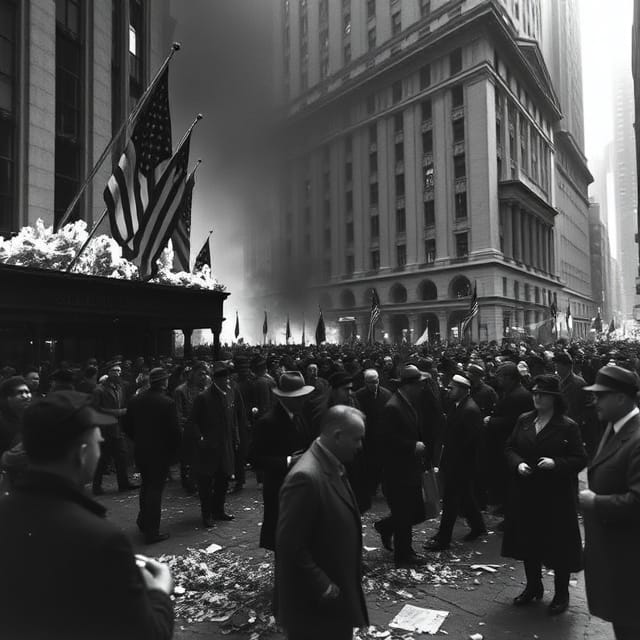
October 1929 witnessed sheer panic in trading. The bankers gathered to prevent a total collapse but failed significantly. On Black Tuesday, prices continually dropped, leading many to believe all hope was lost. Sure, some financial heavyweights tried to buy up shares to restore confidence, but the damage had been done.
The Dow’s decline continued for years. In fact, it didn’t reach pre-crash levels until 1954. The fallout from the Wall Street Crash reached far beyond New York, signaling the beginning of the Great Depression.
Aftermath and Economic Impact
The repercussions were enormous, leading to mass unemployment and widespread economic despair. Historians often debate whether the crash triggered the Great Depression or merely coincided with existing issues. Either way, it dramatically affected lives across America.
In response, the U.S. Senate established the Pecora Commission to investigate the causes. This event led to regulations, like the Glass-Steagall Act, aiming to separate commercial and investment banking to prevent future crises.
Final Thoughts
The Wall Street Crash of 1929 remains a stark reminder of economic volatility and the cascading effects of massive financial failure. Understanding this pivotal moment in history prepares us to recognize potential future pitfalls, a critical lesson for anyone interested in finance or history.